Confined Space Meaning: What Is a Confined Space? 20 SA Examples
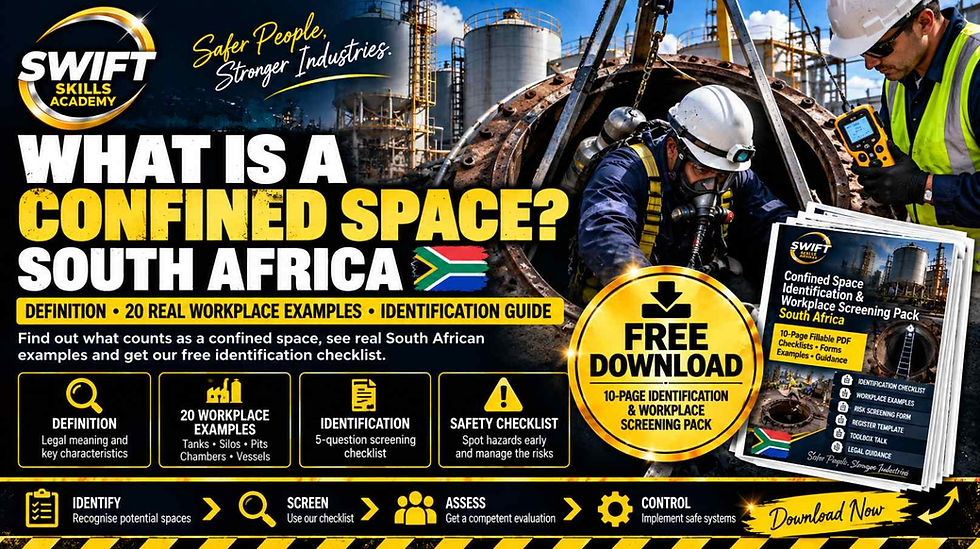
Confined space meaning in South Africa: what qualifies as a confined space? It is not simply a room without windows or a place where someone feels cramped. The General Safety Regulations focus on enclosed, restricted or limited spaces where the design, location, contents or work could create hazardous substances or an oxygen-deficient atmosphere.
This guide helps employers recognise 20 common and easily overlooked workplace examples before making a site-specific assessment.
Quick answer: confined space meaning in South Africa
A confined space is an enclosed, restricted or limited space where dangerous substances or an oxygen-deficient atmosphere may occur because of its construction, location, contents or the activity inside it.
The regulatory definition expressly includes various chambers, tunnels, pipes, pits, sewers, containers, valves, pumps and sumps where dangerous liquids, gases, vapours, dusts or fumes may be present. The name of an item alone is not enough to classify every instance; examine the actual hazards and circumstances.
What makes a workplace a confined space?
First, examine the physical space. Is it enclosed, restricted or limited by its construction, location or access? A space may be large enough to stand inside and still be confined. A small storeroom is not automatically a confined space.
Second, examine what may happen to the atmosphere. Could oxygen be depleted by rusting, biological activity, inert gas or displacement? Could vapour, dust, gas, fumes or dangerous liquid accumulate?
Third, examine the task. Cleaning, coating, welding, grinding, maintenance or using solvents can create new atmospheric risks in a space that was previously relatively benign.
Fourth, examine neighbouring processes. Opening valves, draining lines, using machinery and changing weather or water conditions can alter the danger. A previous inspection does not establish permanent safety.
20 real South African workplace examples: identification guide
1. Water storage tanks
Assess restricted openings, oxygen displacement, cleaning agents and residues.
2. Fuel tanks
Consider flammable vapours, residues, ignition risk and altered conditions during cleaning.
3. Chemical reaction vessels
Review previous contents, incompatible chemicals, oxygen levels and residues.
4. Underground manholes
Check sewage gases, changing inflows, access and neighbouring services.
5. Sewer pipes
Consider oxygen-deficient or toxic atmosphere, liquids and difficult rescue access.
6. Stormwater culverts
Examine flooding, restricted geometry, organic decomposition and contamination.
7. Industrial sumps
Consider sludge, gases, engulfment, hidden moving parts and drains.
8. Pump chambers
Review ventilation, leaks, equipment energy and restricted entry.
9. Storage silos
Evaluate dust, bridging, flowing solids, possible engulfment and access.
10. Grain hoppers
Assess grain movement, dust, oxygen conditions and entrapment risk.
11. Boilers and boiler drums
Consider internal access, residual heat, cleaning agents and isolation.
12. Process pipelines
Assess residues, communicating valves, gas migration and limited access.
13. Mixing vessels
Review blades, residual chemicals, washdown products and vapours.
14. Valve chambers
Consider pooled water, gas migration, restricted access and service lines.
15. Industrial tunnels
Check air quality, ventilation, length, maintenance operations and escape routes.
16. Septic tanks
Consider hydrogen sulphide, oxygen displacement, sewage and biological hazards.
17. Wastewater digesters
Review toxic gases, methane, oxygen conditions and process connections.
18. Refrigeration pits
Assess displaced oxygen, leaks, pooled gases and restricted access.
19. Ship compartments
Consider cargo residues, ballast, ventilation and enclosed geometry.
20. Underground cable vaults
Evaluate service gases, flooding, cable hazards and restricted means of escape.
Does every tank, basement, pit or small room count?
No. A familiar name is a screening clue, not an automatic legal classification. An open, well-ventilated pit with no foreseeable atmospheric hazard may need different controls from a sludge-filled underground sump. Conversely, a large enclosed vessel with a normal-sized opening can still meet the definition.
A basement is not automatically a confined space because it is underground. A walk-in refrigerator is not automatically a confined space because its door closes. However, refrigerant leaks, maintenance activity, restricted escape or oxygen displacement may create relevant hazards that need a competent, site-specific decision.
Use a written register of suspect spaces rather than declaring all spaces safe or hazardous based on their labels.
A five-question confined-space screening test for employers
Question 1: Is the area enclosed, restricted or limited in shape, location or access?
Question 2: Could its contents, construction or position allow harmful gas, vapour, dust, fumes, dangerous liquid or deficient oxygen?
Question 3: Could the work itself introduce these hazards, for example welding, cleaning or applying coatings?
Question 4: Could neighbouring plant, drains, process lines or weather change the conditions?
Question 5: If you are uncertain, have you stopped unauthorised entry and obtained a competent site-specific assessment?
This is a preliminary screening aid, not a legal certification. Any suspected confined space should be referred for competent evaluation before entry.
Confined space versus restricted access: the crucial difference
Restricted access alone does not settle the definition. A narrow, ordinary passage may be inconvenient or present evacuation hazards without an atmospheric risk. A vessel with a wide access hatch may nevertheless be confined if hazardous contents or working conditions can create the relevant atmosphere.
Employers should also recognise that a space excluded from this particular definition can still have serious fall, fire, machinery, structural or other occupational hazards. “Not a confined space” does not mean “safe”.
Which industries should screen these spaces?
Common settings include manufacturing plants, marine repair, petrochemical facilities, farms and grain storage, municipalities, wastewater works, construction projects, food production, mining-related plants, utilities and HVAC maintenance.
For a Cape Town employer, likely inspection candidates might include water and wastewater chambers, factory process vessels, sumps, storage silos, underground service vaults and maintenance tanks. Workplace classification must be based on the actual site, not an industry label.
What happens after identifying a possible confined space?
Record the asset and location in a workplace inventory; document its normal and occasional contents; identify changing processes; select a responsible person for the assessment; prevent unassessed entry; and define who may authorise maintenance.
If entry is contemplated, the relevant duty-holder must address General Safety Regulation 5. In particular, its opening provision requires competent atmospheric testing and evaluation and a written certificate that the space is safe for the actual work and its duration. This guide does not replace the detailed legal duties explained in SSA’s separate Regulation 5 article.
Keep the full entry-permit process, breathing apparatus conditions, isolation details and rescue requirements in the dedicated permit and regulation guides. The purpose of this page is helping readers recognise and inventory possible confined spaces.
A sample confined-space identification register
For each suspected space, record: a unique site ID; location; equipment or structure; physical restriction; past and present contents; foreseeable atmospheric changes; activities performed; access conditions; interacting processes; competent assessor; assessment date; classification and required follow-up.
An initial entry labelled “assessment required” is safer and more informative than an unsupported “safe” decision. Review the register when tasks, chemicals, processes or equipment change.
Common identification mistakes employers make
Mistake one: assuming a large space cannot be confined. Mistake two: assuming an empty vessel contains clean air. Mistake three: treating a previous gas reading as permanent evidence. Mistake four: ignoring maintenance chemicals and welding fumes. Mistake five: relying on a generic list rather than assessing the actual asset.
Other errors include overlooking stormwater chambers after rainfall, failing to assess valve and pump sumps, and confusing an administrative entry permit with competent-person written safety certification.
Free checklist and practical next steps
Use the five screening questions and the twenty-example guide above as a starting point for a workplace inventory. SSA also offers a free Confined Space Identification & Workplace Screening Pack covering hazard registers, atmospheric records and rescue readiness. This is supplementary planning material, not an entry authorisation or legal certificate.
Frequently asked questions
What is the meaning of confined space?
Under South Africa’s General Safety Regulations, the definition focuses on an enclosed, restricted or limited space where hazardous substances or an oxygen-deficient atmosphere may occur due to its construction, location, contents or work activity.
Is a water tank always a confined space?
Not automatically by name alone. Evaluate its configuration, access, contents, atmosphere and the planned work.
Is a manhole a confined space?
Many manholes present the relevant risks, but classification and control measures must follow the actual conditions.
Can an empty vessel still be a confined space?
Yes. Residual gases, oxygen displacement or cleaning and maintenance tasks may create atmospheric hazards.
Is a basement a confined space?
Not solely because it is underground. Assess relevant atmospheric hazards and the actual layout and activities.
Does an open-top pit count?
It may, depending on restriction, accumulated hazardous gases or other relevant conditions. Do not use “open top” as a blanket exemption.
Is confined-space training a substitute for atmospheric testing?
No. The applicable Regulation 5 requirements, including competent-person evaluation and written certification, must still be addressed.
Who should classify possible confined spaces at work?
The employer should arrange an appropriate competent assessment of the actual asset, hazards and foreseeable work, keeping a documented register.
Authoritative Sources & Regulatory References
Authoritative Source | What It Supports |
Legal definition of a confined space and the types of hazards and structures covered. | |
Competent atmospheric evaluation and written certification when confined-space entry is contemplated. | |
Broader occupational health and safety responsibilities of employers and workplace duty-holders. |
Read More
Related SSA Article | Why Read It |
Explore fifteen principal hazards and control measures. | |
Understand the specific legal duties after identifying a space. | |
Understand which workplace roles and training pathways are relevant. |
Final Word
The best starting point is an accurate inventory: which spaces are enclosed, restricted or limited, and how could their contents, location or activities change the atmosphere?
Use that inventory to trigger a competent assessment, not an assumption. When your teams need confined-space training in Cape Town or on site, Swift Skills Academy can help you choose the right next step.


