Warehouse Fire Safety South Africa: Employer Guide to Storage, Racking, Forklifts & Evacuation

QUICK ANSWER
Warehouse fire safety South Africa is not a once-off extinguisher check. Employers need a working system that keeps storage, aisles and escape routes clear; controls combustible packaging, charging areas, hot work and dangerous goods; keeps fire equipment accessible and maintained; and tests whether people can evacuate and respond safely on every shift. The correct controls depend on the building, stored goods, layout, activities and approved fire-protection arrangements.
Warehouses change continuously. Stock arrives, pallets move, temporary staging appears, racking configurations change, packaging accumulates and staffing differs by shift. A fire-safety system that looked acceptable during one inspection can be undermined by ordinary operations days later.
Warehouse Fire Safety South Africa: What Employers Should Control
Storage and racking: check stock arrangement, escape access, fire-equipment access and interaction with installed protection.
Picking and packing: control cardboard, plastics, waste, dust and ignition sources.
Forklift and charging areas: inspect battery condition, chargers, cables, housekeeping and manufacturer requirements.
Loading bays: manage temporary staging, vehicles, doors, exits and emergency access.
Maintenance and contractors: control hot work, temporary equipment, authorisation and follow-up.
Dangerous goods: confirm identification, SDS information, storage controls and any additional local requirements.
Found a Fire-Response Training Gap in Your Warehouse?
A blocked exit, failed alarm or unsuitable fire-protection system needs the correct physical or technical fix. But if the weakness is employee competence, shift coverage or safe first response, close that people gap deliberately.
Why Warehouse Fire Risk Changes Faster Than Many Employers Expect
A warehouse is a moving fire-load environment. The quantity, type and location of stored goods can change daily. Packaging can add combustible material even when the product itself is not particularly flammable. Temporary storage created during peak receiving or dispatch can alter access to exits, alarm points and firefighting equipment.
The operational question is therefore not only, “Do we have fire equipment?” It is also, “Can people reach it, can they escape, will the alarm be heard, can the team account for people, and have changes in stock or layout undermined the fire-protection arrangements?”
What South African Law Requires Employers to Get Right
South African workplace fire safety is not governed by one warehouse checklist. Employer duties arise from the Occupational Health and Safety Act, the General Safety Regulations, building and fire-protection requirements, and any additional rules that apply to the substances, processes, premises or municipality involved.
Housekeeping, access and escape routes
The General Safety Regulations were amended in March 2025. Regulation 13H addresses housekeeping and requires indoor workplaces to be kept clean and orderly, with floors, walkways, stairs, passages and gangways kept in good repair and free from obstructions, waste and materials that create hazards. Regulation 13J addresses fire precautions and means of egress, including keeping fire escapes, doors and routes usable for emergency escape.
For a warehouse, that means temporary pallets, receiving stock, packaging waste and overflow storage cannot be treated as harmless operational clutter when they interfere with escape or emergency access.
Suitable firefighting equipment
Regulation 13J also requires adequate and suitable firefighting equipment at strategic locations, having regard to the workplace and flammable articles present, with that equipment maintained in good working order. This is a risk-based duty, not a single universal extinguisher ratio that can be copied from one warehouse to another.
Use routine workplace checks to spot access, damage or readiness defects, but remember that a visual readiness check does not replace required technical inspection or servicing. SSA's Fire Extinguisher Inspection Checklist South Africa explains that distinction in more detail.
Building fire protection and approved fire arrangements
Building fire-protection systems can include alarms, detection, emergency lighting, fire doors, hose reels, hydrants, sprinklers, compartmentation and smoke-control measures, depending on the building and its approved design. Warehouse operations should not undermine these systems by changing storage or access without considering the fire-safety implications.
If storage height, racking configuration, commodity mix, charging infrastructure or building use changes materially, determine whether competent fire-protection advice or an update to approved arrangements is required. A generic internet measurement is not a substitute for the building's approved fire design or specialist assessment.
Hazardous chemicals and dangerous goods
Where hazardous chemical agents are stored or handled, the Hazardous Chemical Agents Regulations and the relevant Safety Data Sheets become important. SDS information includes firefighting measures and safe handling and storage information that should inform the workplace controls.
Cape Town employers should also check local dangerous-goods requirements. The City of Cape Town states that premises storing or handling dangerous goods may need specific fire-prevention, protection, signage and emergency-management measures depending on the substances and quantities. The City's guidance also states that a flammable-substance certificate is required above specified quantities, including more than 100 kg of flammable gas or more than 200 litres of flammable liquid in the stated danger groups. This is a Cape Town local requirement and should not be presented as a blanket national threshold.
Eight Warehouse Fire Hazards Employers Should Inspect
1. Storage and combustible packaging
Cartons, shrink wrap, timber pallets and some plastics can materially increase the available fuel in a fire. Inspect both the stored product and the packaging around it. Pay special attention to temporary stock that sits outside the normal storage plan.
2. Racking and temporary overflow storage
Racking is not only a storage-efficiency issue. Changes in rack configuration, stock height and aisle use can affect evacuation, access and the relationship between stored goods and installed fire-protection systems. Overflow storage should never quietly become the new normal without a fire-safety review.
3. Housekeeping and waste
Cardboard, wrapping, broken pallets, dust and general waste can create avoidable fuel and can conceal defects or obstruct access. Set clear waste-removal responsibilities by area and shift instead of relying on a general “keep tidy” rule.
4. Forklifts, charging points and batteries
Include material-handling equipment in the warehouse fire-risk picture. Inspect charging equipment, damaged cables, battery condition, overheating indicators, nearby combustible storage and the manufacturer's charging and emergency instructions. Lithium-ion equipment can require different emergency considerations from conventional lead-acid systems, so the response plan should reflect the actual technology in use.
5. Electrical equipment and machinery
Damaged plugs, overloaded temporary connections, poorly maintained machinery and overheating equipment can create ignition sources. Electrical and machinery defects should be escalated to competent maintenance personnel rather than being managed through training alone.
6. Hot work and maintenance contractors
Welding, cutting and grinding can introduce sparks and hot material into an otherwise controlled warehouse. Contractors need the same level of fire-risk control as employees. Where hot work is undertaken, use a suitable authorisation and follow-up process. See the Hot Work Permit South Africa guide for a dedicated permit workflow.
7. Loading bays and vehicle interfaces
Loading bays can become temporary storage zones during busy periods. Inspect pallet staging, waste, vehicle positioning, doors, emergency access, nearby ignition sources and whether deliveries block routes or fire equipment. Include the loading bay in fire inspections instead of treating it as an external logistics area.
8. Dangerous goods and incompatible storage
Do not assume ordinary warehouse controls are enough when flammable, reactive or otherwise dangerous goods are introduced. Confirm the stock classification, SDS requirements, compatible storage arrangements, signage, emergency information and any local approval or certificate requirements that apply.
Inspect the Warehouse Zone by Zone
Receiving: Is incoming stock temporarily blocking exits, alarm points or firefighting equipment? Are damaged containers identified and escalated?
Storage and racking: Are aisles usable? Has stock height or commodity type changed? Is access to installed fire systems being undermined?
Picking and packing: Is packaging waste controlled? Are electrical tools, heaters or other ignition sources managed?
Charging: Are chargers, batteries, cables and surrounding housekeeping acceptable for the equipment in use?
Loading: Are pallets, vehicles and dispatch staging affecting exits, emergency access or fire equipment?
Maintenance: Is spark-producing work authorised, controlled and checked after completion?
Offices and amenities: Do doors, alarms, evacuation information and access routes still work for the people using these areas?
When Storage Changes Need a Fire-Safety Reassessment
A useful warehouse fire-safety system treats operational change as a trigger for review. Reassess the fire-risk picture when there is a meaningful change to storage, people, processes or protection.
Racking is added, moved or reconfigured.
Storage height or density changes materially.
The commodity or packaging mix changes.
Temporary overflow storage becomes frequent or permanent.
Aisles, doors or pedestrian routes are changed.
Forklift charging or new battery technology is introduced.
Dangerous goods or hazardous chemicals are added or increased.
Fire-protection equipment or building layouts are altered.
Shift patterns, staffing levels or contractor activity change significantly.
If the change affects the overall fire-risk profile, update the Fire Risk Assessment South Africa rather than waiting for the next routine review date.
Warehouse Evacuation Has to Work on Every Shift
A warehouse evacuation plan must work when the site is busy, when temporary workers are present and when staffing is thin. An attractive procedure on a noticeboard does not prove that the system will work in smoke, noise, poor visibility or confusion.
Alarms and communication
Employees need to know how an alarm is raised, what different signals mean where applicable, who contacts emergency services and what to do if the normal communication route fails.
Routes, doors and changing stock
Escape routes can be compromised by ordinary logistics. Receiving and dispatch areas should therefore be included in daily operational discipline, not checked only during formal safety inspections.
Assembly and accountability
The employer needs a practical way to account for employees, contractors and visitors after evacuation without encouraging anyone to re-enter the building to search. The method should reflect the actual workforce and shift system.
Night shift and low staffing
A day-shift plan can fail at night if trained personnel, supervisors or appointed role-holders are absent. Review coverage by shift and by work area, then test it through drills.
Use the Emergency Response Plan South Africa to build the wider response system, and the Fire Drill Checklist South Africa to test whether that system actually works.
Fire Equipment Access Is an Operational Control
A serviced extinguisher hidden behind pallet stock is not readily useful in an emergency. The same principle applies to hose reels, hydrants, manual call points, alarm interfaces, fire doors and other installed fire-protection measures.
Include access to fire equipment in ordinary warehouse walk-throughs. Record blocked access, visible damage, missing signs or other readiness defects and assign corrective action. Technical servicing and inspection requirements still need to be carried out by the appropriate competent or authorised parties.
Hot Work and Contractor Activity
Maintenance shutdowns and contractor work can temporarily create a higher fire risk than normal operations. Before hot work begins, check the work area, nearby combustibles, fire-response arrangements, authority to proceed and what post-work monitoring or final checks are required. After the work, close the permit or authorisation only after the agreed checks are complete.
From Inspection to Closure: FIND → ASSIGN → CORRECT → VERIFY → CLOSE
Find
Describe the actual defect, not a vague label such as “fire safety issue.” Record the location, condition and what could happen if it remains unresolved.
Assign
Give each corrective action a responsible person and target date. A checklist without ownership becomes a list of known problems.
Correct
Choose the control that addresses the real cause: remove the obstruction, fix the electrical defect, improve housekeeping, revise the procedure, restore the fire-protection system or train people where competence is genuinely deficient.
Verify
Confirm that the action was completed and that the control actually works. A closed email or signed form is not enough when the physical condition remains unchanged.
Close
Retain a clear record of the defect, corrective action and verification. Use recurring failures to identify deeper system problems instead of repeatedly fixing the same symptom.
When Fire Fighting Training Is the Right Corrective Action
Training is appropriate when the risk review identifies a genuine employee competence or coverage gap. Examples include insufficient trained personnel for a shift, employees who do not understand safe first-response limits, or operational changes that introduce different fire hazards and response expectations.
Training is not a substitute for blocked exits, defective alarms, unsuitable fire equipment, poor housekeeping, unsafe electrical installations or deficient building fire protection. Those conditions require the relevant physical, technical or management controls.
If smoke, heat, falling visibility or an unsafe escape route makes basic suppression unsafe, employees should retreat and evacuate according to the emergency procedure. The dedicated Workplace Fire Smoke Safety South Africa guide explains the retreat decision in more detail.
Build a Warehouse Fire-Response Team That Can Actually Perform
Frequently Asked Questions
What are the biggest warehouse fire risks in South Africa?
Common risk areas include combustible stock and packaging, poor housekeeping, obstructed escape routes, electrical or machinery ignition sources, charging areas, hot work, loading-bay activity, dangerous goods and fire-protection systems that no longer match the way the warehouse is being used. The actual priority depends on the specific warehouse.
Does every warehouse need the same firefighting equipment?
No. South African General Safety Regulation 13J uses a workplace- and risk-based approach. Equipment must be adequate, suitable and strategically located with regard to the workplace and flammable articles present. Building design, stored goods and additional requirements can also affect what is needed.
How often should warehouse fire safety be checked?
There is no single universal inspection interval that replaces all other duties. Employers should combine routine operational checks with the servicing or inspection requirements that apply to installed systems, plus reviews after incidents, defects or meaningful changes in stock, layout, processes or staffing.
Can stock or pallets be stored in escape aisles?
Escape routes and means of egress need to remain usable for emergency escape. Warehouse operations should not use required escape routes as overflow storage. The exact layout and dimensional requirements depend on the building and approved fire arrangements, so avoid substituting generic internet measurements for the approved design.
Does changing racking or storage height affect fire safety?
It can. Changes may affect escape, access, fuel arrangement and the effectiveness of installed protection such as sprinklers or detection. Material changes should trigger a review against the approved fire design and, where necessary, competent fire-protection advice.
What if a warehouse stores dangerous goods in Cape Town?
Check the City of Cape Town's dangerous-goods requirements as well as national workplace rules. The City states that the substances and quantities stored determine additional precautions, protection and suppression requirements, and its guidance includes flammable-substance certificate thresholds for specified flammable gases and liquids.
Is Fire Fighting training enough to make a warehouse compliant?
No. Training can address a genuine competence or response-coverage gap, but compliance and fire readiness also depend on hazards, housekeeping, exits, equipment, building protection, emergency procedures, maintenance and implementation. A certificate does not repair a defective control.
Should forklifts and battery charging be included in a warehouse fire review?
Yes. Review the equipment and battery technology actually in use, the charging installation, battery condition, housekeeping, nearby combustibles, manufacturer instructions and emergency response. Escalate electrical or technical defects to competent specialists.
Authoritative Sources & Regulatory References
Occupational Health and Safety Act 85 of 1993 — South African Government — employer duties relating to workplace health and safety.
General Safety Regulations amendment — Government Gazette, 6 March 2025 — current housekeeping, fire precautions, means of egress and firefighting-equipment provisions including Regulations 13H and 13J.
Hazardous Chemical Agents Regulations 2021 — South African Government — hazardous chemical-agent controls and Safety Data Sheet information relevant to handling, storage and firefighting measures.
City of Cape Town — Storage of Dangerous Goods — Cape Town-specific dangerous-goods fire precautions, emergency arrangements and flammable-substance certificate guidance.
City of Cape Town — Fire Safety — local guidance on workplace evacuation, combustible waste, fire-safety equipment and prevention practices.
National Building Regulations and Building Standards Act 103 of 1977 — national building-regulation framework relevant to building fire protection and approved arrangements.
Read More
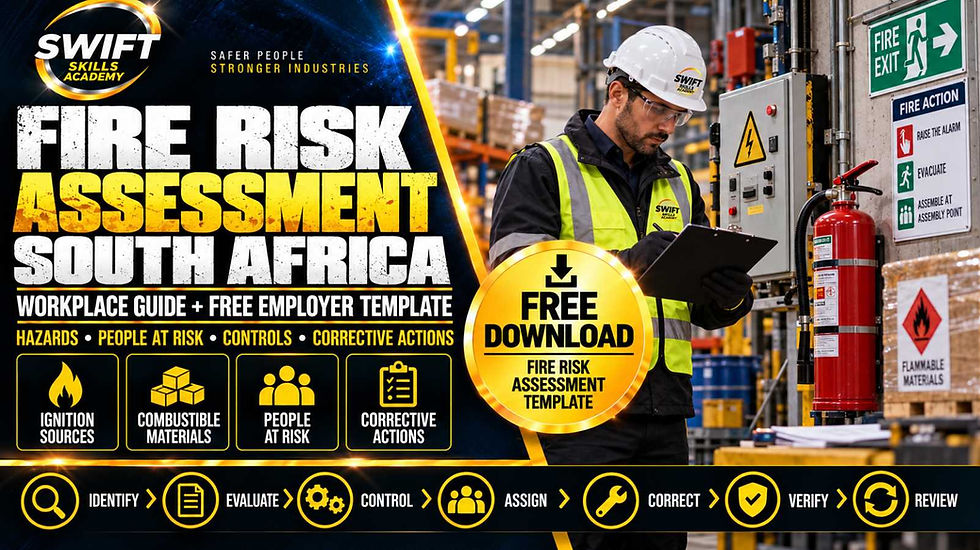
Fire Risk Assessment South Africa: Workplace Guide + Free Employer Template — build the fire-risk picture and assign corrective actions.
Emergency Response Plan South Africa: Workplace Emergency Procedures, Evacuation, Roles & Free Emergency Plan Template — build alarms, roles, evacuation, accountability and recovery into one workplace plan.
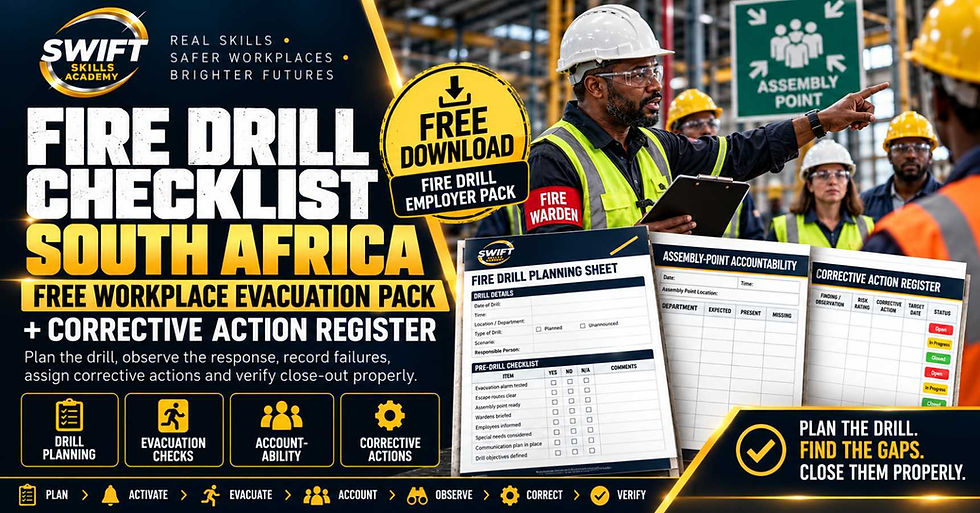
Fire Drill Checklist South Africa: Workplace Evacuation Drill Guide + Free PDF — test whether the plan works under realistic workplace conditions and close drill failures.
Final Word
A warehouse can look organised and still carry serious fire risk if operational changes have blocked escape routes, increased combustible load, weakened equipment access or left a shift without workable emergency coverage. Strong warehouse fire safety is a management cycle: identify what changed, inspect the real conditions, assign corrective action, verify that it works and review the system whenever the operation changes again.